11/23
67
Posted in:admin
Nj7jb98p4tUwjEMNfcjVoc6nECew1cJ3EZQGPnWKJsJBsDvNq7G0C1kk9lPEF0=h900' alt='Screen Digital Clock' title='Screen Digital Clock' />Digital clock Wikipedia. This article is about the appliance. For timing reference for digital audio, see Word clock. Basic Kanji Book 2 Pdf'>Basic Kanji Book 2 Pdf. Basic digital alarm clock without a radio. The mark in the top left of the display indicates that the time is 4 0. A 1. 96. 9 radio alarm clock Sony Digimatic 8. FC 5. 9W with an early mechanical digital display. A digital clock is a type of clock that displays the time digitally i. Digital clocks are often associated with electronic drives, but the digital description refers only to the display, not to the drive mechanism. Both analog and digital clocks can be driven either mechanically or electronically, but clockwork mechanisms with digital displays are rare. The biggest digital clock is the Lichtzelt Pegel Light Time Level on the television tower Rheinturm Dsseldorf, Germany. HistoryeditThe first digital pocket watch was the invention of Austrian engineer Josef Pallweber who created his jump hour mechanism in 1. Instead of a conventional dial, the jump hour featured two windows in an enamel dial, through which the hours and minutes are visible on rotating discs. The second hand remained conventional. By 1. 88. 5 Pallweber mechanism was already on the market in pocket watches by Cortbert and IWC arguably contributing to the subsequent rise and commercial success of IWC. The principles of Pallweber jump hour movement had appeared in wristwatches by the 1. Screen Digital Clock' title='Screen Digital Clock' />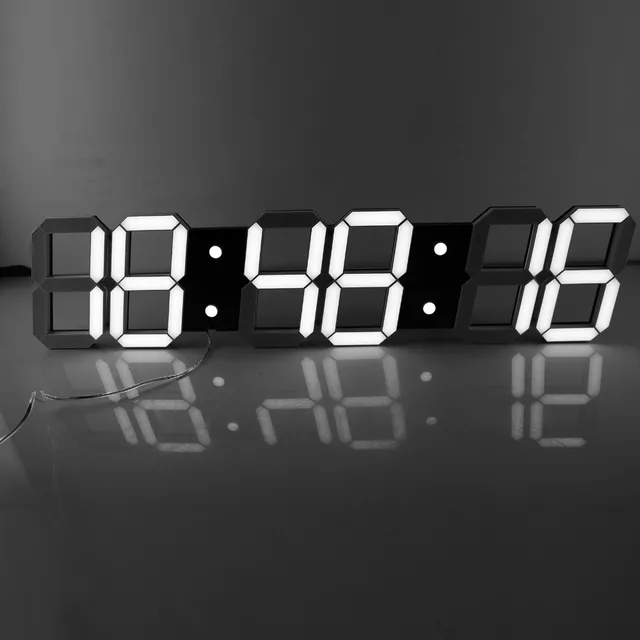 Cortbert and are still used today Chronoswiss Digiteur. While the original inventor didnt have a watch brand at the time, his name has since been resurrected by a newly established watch manufacturer. Plato clocks used a similar idea but a different layout. These spring wound pieces consisted of a glass cylinder with a column inside, affixed to which were small digital cards with numbers printed on them, which flipped as time passed. Screen Digital Clock' title='Screen Digital Clock' />The Plato clocks were introduced at the St. Louis World Fair in 1. Ansonia Clock Company. Must have Digital Clock gadget work with Windows 7 and Vista. All Free A free online digital analog clock with audible alarm options. Turn any device into a digital clock with an audible alarm. Add something extra ordinary to your drawing room and choose the large digital wall clock with blue numerals. The rectangular shape looks modern under the TV or arm. Screen Digital Clock' title='Screen Digital Clock' />Eugene Fitch of New York patented the clock design in 1. Josef Pallweber had patented the same invention using digital cards different from his 1. Germany DRP No. 5. The German factory Aktiengesellschaft fr Uhrenfabrikation Lenzkirch made such digital clocks in 1. The earliest patent for a digital alarm clock was registered by D. E Protzmann and others on October 2. United States. Protzmann and his associates also patented another digital clock in 1. Two side plates held digital numerals between them, while an electric motor and cam gear outside controlled movement. In 1. LED display was mass produced. Called the Pulsar, and produced by the Hamilton Watch Company, this watch was hinted at two years prior when the same company created a prototype digital watch for Kubricks 2. A Space Odyssey. 5 Throughout the 1. Over the years, many different types of digital alarm clocks have been developed. In Soviet Russia, the 7 segment digital clocks were known as Elektronika 7. ConstructioneditDigital clocks typically use the 5. AC power or a 3. 2,7. Most digital clocks display the hour of the day in 2. United States and a few other countries, a more commonly used hour sequence option is 1. AM or PM. Some timepieces, such as many digital watches, can be switched between 1. Emulations of analog style faces often use an LCD screen, and these are also sometimes described as digital. Displaysedit. A digital clocks display changing numbers. An LCD battery operated clock without alarm. To represent the time, most digital clocks use a seven segment. LED, VFD, or LCD for each of four digits. They generally also include other elements to indicate whether the time is AM or PM, whether or not an alarm is set, and so on. Settingedit. A premium digital clock radio with digital tuning. A basic digital clock radio with analog tuning. If people find difficulty in setting the time in some designs of digital clocks in electronic devices where the clock is not a critical function, they may not be set at all, displaying the default after powered on, 0. Digital clocks that run on mains electricity and have no battery must be reset every time the power has an accident or if they are moved. Even if power is cut off for a second, most clocks will still have to be reset. This is a particular problem with alarm clocks that have no battery backup, because even a very brief power outage during the night usually results in the clock failing to trigger the alarm in the morning. To reduce the problem, many devices designed to operate on household electricity incorporate a battery backup to maintain the time during power outages and during times of disconnection from the power supply. More recently, some devices incorporate a method for automatically setting the time, such as using a broadcast radiotime signal from an atomic clock, getting the time from an existing satellite television or computer connection, or by being set at the factory and then maintaining the time from then on with a quartz movement powered by an internal rechargeable battery. Commercial digital clocks are typically more reliable than consumer clocks. Multi decade backup batteries can be used to maintain time during power loss. A digital clock built into an oven. Because digital clocks can be very small and inexpensive devices that enhance the popularity of product designs, they are often incorporated into all kinds of devices such as cars, radios, televisions, microwave ovens, standard ovens, computers and cell phones. Sometimes their usefulness is disputed a common complaint is that when time has to be set to Daylight Saving Time, many household clocks have to be readjusted. The incorporation of automatic synchronization by a radio time signal is reducing this problem see Radio clock. A digital light clock that can determine room temperature. ReferenceseditExternal linksedit. Arduino Alarm Clock Using a Real Time Clock and LCD Screen. By Ali Hamza. In this project, we are going to make an Arduino alarm clock using the DS3. This module is very cheap and it works through I2. C communication, which makes it easy to use with the microcontrollers. We will get the time using this module and will make the buzzer to beep after comparing the current time with the alarm time. This module also tells us the temperature. Components Required. The components required for this project are as follows. How Does it Work The DS3. It has a built in 3. V battery which keeps updating the time. We will get the time and date from the RTC module using the library functions and then we will compare this time with the alarm time that we have set in the code. If the current time matches with the alarm time, then the buzzer will start to beep. The beeping time in our code is 2 minutes but you can increase it for as much you want. The time and date will also be displayed on the LCD. Circuit Diagram. Connect the LCD to the Arduino as follows Pin 1 on the LCD to ground on the Arduino. Pin 2 on the LCD to 5. V on the Arduino. Pin 3 on the LCD to the middle pin on the 1. K potentiometer. Pin 4 on the LCD to digital pin 2 on the Arduino. Pin 5 on the LCD to the ground of Arduino. This will put the LCD in read mode. Pin 6 on the LCD to the pin 3 of Arduino. Connect the data pins D4 D7 to the pins 4, 5, 6, 7 on the Arduino. Pin 1. 5 to the 5. V pin on the Arduino through the 2. This is the positive pin of the backlight. Pin 1. 6 to ground on the Arduino. This is the negative pin of the backlight. Then connect the DS3. Arduino as follows GND on the DS3. GND on the Arduino. VCC on the DS3. 23. V pin on the Arduino. SCL on the DS3. 23. A5 on the Arduino. SDA on the DS3. 23. A4 on the Arduino. Finally, connect the positive of the buzzer to pin 1. Arduino and the negative the of buzzer to GND on the Arduino. Arduino Alarm Clock Codeinclude lt DS3. Wire. h include lt Liquid. Crystal. h Liquid. Crystal lcd2, 3, 4, 5, 6, 7 DS3. SDA, SCL Time t define buz 1. Hor int Min int Sec void setup Wire. Serial. begin9. 60. Modebuz, OUTPUT lcd. Cursor0,0 lcd. DIYHacking. Cursor0,1 lcd. Arduino Alarm The following lines can be uncommented to set the date and time rtc. DOWWEDNESDAY Set Day of Week to SUNDAY rtc. Time1. 2, 0, 0 Set the time to 1. Date1, 1, 2. 01. Set the date to January 1st, 2. Time Hor t. Min t. Sec t. Cursor0,0 lcd. Time lcd. printrtc. Time. Str lcd. Cursor0,1 lcd. Date lcd. printrtc. Date. Str if Hor 1. Min 3. 2 Min 3. Comparing the current time with the Alarm timeBuzzer Buzzer lcd. Alarm ON lcd. set. Cursor0,1 lcd. Alarming Buzzer Buzzer delay1. Buzzerdigital. Writebuz,HIGH delay5. Writebuz, LOW delay5. Code Explanation. First of all, we included the libraries for the DS3. LCD. The wire library is for the I2. C communication between the DS3. Magnetic Card Reader Writer Software Download Free. Arduino. The DS3. Arduino through the I2. C communication, so we have included the wire library. DS3. 23. 1. h include lt Wire. Liquid. Crystal. h After that, we initialized the variables that we are going to use in this code. Liquid. Crystal lcd2, 3, 4, 5, 6, 7 DS3. SDA, SCL Time t define buz 1. Hor int Min int Sec The below lines are commented in the code. These lines are for setting the date and time for the RTC module. You wont have to set the date and time every time you use it because the RTC module has a battery which keeps on working even when the module is not powered. DOWWEDNESDAY Set Day of Week to SUNDAY rtc. Time1. 2, 0, 0 Set the time to 1. Date1, 1, 2. 01. Set the date to January 1st, 2. In the loop function, we get the time from the module and store it in the variables. We will compare these variables later with the alarm time we want to set. Time Hor t. Min t. Sec t. After that, we print the time and date on the LCD screen. Cursor0,0 lcd. Time lcd. Time. Str lcd. Cursor0,1 lcd. Date lcd. printrtc. Date. Str Then we compare the current time with the alarm time and if the time matches, the buzzer will start to beep. The buzzer will keep on beeping for 2 minutes, but you can increase or decrease the beeping time for as many minutes you want. Hor 1. 1 Min 3. Min 3. Comparing the current time with the Alarm timeBuzzer Buzzer lcd. Alarm ON lcd. set. Cursor0,1 lcd. Alarming Buzzer Buzzer.