10/10
42
Posted in:admin
Creating a Bootable DOS Flash Drive the Easy Way Techgage. Fate Hollow Ataraxia Pc Game here. Like the old fangled BIOS which is slowly being phased out with the help of EFI, the DOS operating system is a piece of computing history that refuses to be only history. While most folks will never have to look at DOS in this day and age, there are situations where using it may be unavoidable. AAriWV6Fd54/hqdefault.jpg' alt='Ms Dos Iso For Vmware' title='Ms Dos Iso For Vmware' />The most common Updating that old school BIOS we just mentioned. So where on earth do you get a copy of DOS in 2. You might be surprised to learn that DOS is stilll being kept alive thanks to projects like Free. DOS and DR DOS. But even those can be a little complicated to get running, especially if youre hoping to just plug in a thumb drive and boot right into it. Irredeemable 37 Cbr. Some DOS variants exist on Live. CDs, but you might run into the problem where youll be unable to find any files outside of the operating system itself eg C. The goal of this article is to give you the easiest solution to build a bootable DOS thumb drive flash drive. Guide How to Install Windows 8. VirtualBox With Guest Additions Download ISO file For Separate Virtual Machine. By Dinesh. Contact Us. If you notice problems with the data in the vCG, please let us know. Please note The team monitoring your feedback cannot respond to the questions about. Coordenadas 47 38 19 N, 122 7 43 W. VBSQGV4xw/T5qZTY9tVdI/AAAAAAAABCc/mx0uv3Trx3M/s1600/022.jpg' alt='Ms Dos Iso For Vmware' title='Ms Dos Iso For Vmware' />You might want to do more than simply run a BIOS flashing tool, and thats fine. English Immersion Programs In Spain on this page. Solutions such as Free. DOS are designed to run anything DOS is meant to, including games. Your options are far from limited. Since neither VMware or Virtual. Box allow booting from a thumb drive, Ill need to reference the below screenshot I grabbed after installing Free. DOS to a virtual machine. Good question We offer two types of boot disk images, depending on your needs. The contents of these disks are identical, so you will only need one or the other. Windows PEBartPE AIKWindows PE WinBuilderVistaPE7PE8PE PEVMware Player MSDOSWin. GuestOS. VMXfile parameters. What happens Most obvious effect of the choice of a guestOs is the VMwaretoolsiso that will be connected if. HPecI/UFWVLwn1CXI/AAAAAAAACIw/Qe4Ic6tvQ4k/s1600/TC.PNG' alt='Ms Dos Iso For Vmware' title='Ms Dos Iso For Vmware' />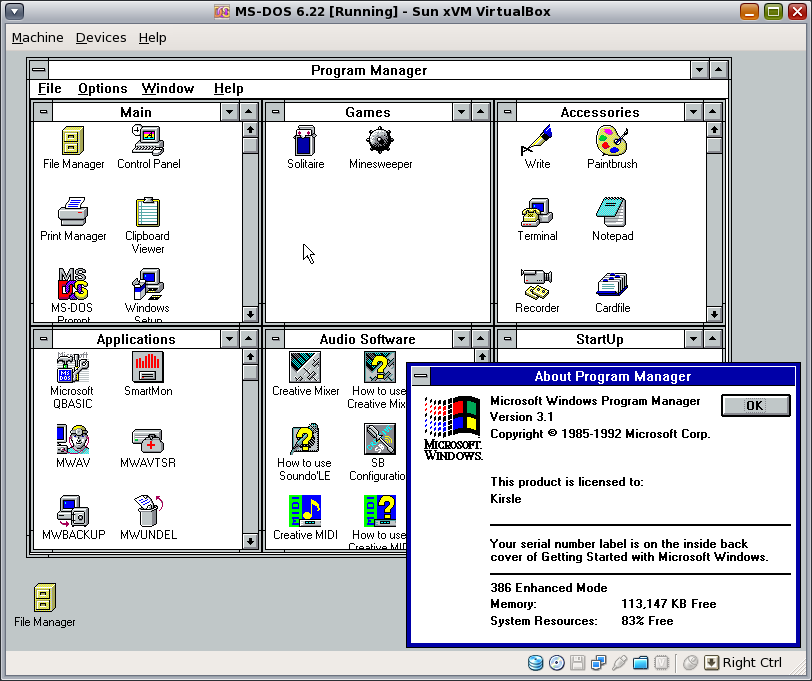 The solutions I am going to point out below arent going to mimic this screenshot entirely, but the end solution will be the same youll have DOS at the ready. One of the biggest reasons for writing this article is that finding a solution to this problem isnt exactly easy. Thats so much the case that Ive been without a solution for years, a problem rectified just within the last week. Its clear that there are not enough simple guides out there, so this article strives to be one. As a side reason, theres a website youre bound to land on when searching for this solution that refuses to tell you the name of its most recommended tool unless you cough over 4. The site even goes far enough to provide a screenshot of the tool, while blocking out its title bar. Thankfully, with the help of Google image search, Ive been able to track that tool down, and to my surprise not really, its 1. For your hard earned 0, Ill let you in on its name Rufus. Rufus. Its name might be a little strange for the job it does, but Rufus has some interesting claims. According to the developer, its the fastest bootdisk creator around, even beating the secondary tool Ill talk about next. The program can create bootable thumb drives for more than just DOS, including a ton of different Linux distributions and even Windows Vista, 7 and 8. Despite its simple goal, Rufus is quite flexible. To gain full functionality, youll want to hit the Format Options toggle, which might as well be called Advanced, as it opens up a couple of extra options. Hitting that toggle also increases the number of options in the Create a bootable disk using menu. By default, MS DOS will be shown, but after the toggle youll see Free. DOS, ISO and Syslinux. I used both the MS DOS and Free. DOS setting to test the program out, but to actually flash a BIOS, I simply stuck with the MS DOS option yes, I actually flashed a BIOS during testing. Because DOS as a whole is very small, the entire process took about five seconds total, and the amount of data transferred might as well be nil. Unlike the next program Im going to talk about, there are a couple of things that I find gives Rufus an advantage. First, it has the ability to detect when a drive is plugged in, after its already opened. Most other tools, by contrast, will need to be restarted to spot the change. Also, where Free. DOS is concerned, Rufus flashes the drive in such a way that when you boot up with it, youll wind up at the command prompt there are no menus to contend with. This speeds things up and removes some tedium. While I prefer Rufus for this purpose more than any other tool Ive ever checked out, Id be remiss to not talk about another very popular option, UNetbootin. UNetbootin. Ive used UNetbootin in the past for creating bootable Linux thumb drives, and to my recollection, its never failed me. One of its best features is allowing you to create a bootable drive for an OS you dont even have downloaded. That of course means itll download the ISO for you, which is quite handy. If the OS you want isnt listed, it might still work. In a personal example, Gentoo isnt listed, but Ive successfully made a bootable thumb drive with this program. Compared to Rufus, UNetbootin is lacking in the options department, but for most people, thats not going to matter. Unless youre trying to flash an oddball thumb drive, either of these tools will suffice if all thats needed is a Free. DOS option. There is one thing about UNetbootin that might turn some away, however. No matter what OS or tool you make a bootable thumb drive with, UNetbootin puts in its own boot menu. This might have its upsides, as it seems the OS you choose will edit this menu appropriately, but Ive personally never needed anything but the default boot option, so its only ever slowed me down. For non Windows users, UNetbootin has a major advantage compared to Rufus its also for Linux and OS X. Ive used the Linux version in the past and its worked just the same as the Windows version, so Id heartily recommend it. With our look at Rufus and UNetbootin out of the way, youre now on the right path to creating a bootable DOS thumb drive. So go forth, flash that BIOS, play that CGA game or torture yourself with a DOS spreadsheet program. As a side note, if youre interested in creating a bootable flash drive equipped with a Windows installer using a couple of official methods, check out our article here. Download Links. Discuss this article in our forums Have a comment you wish to make on this article Recommendations Criticism Feel free to head over to our related thread and put your words to our virtual paper There is no requirement to register in order to respond to these threads, but it sure doesnt hurtVMware Compatibility Guide GuestHost Search. VMware provides the widest virtualization support for guest operating systems in the industry to enable your environments and maximize your investments. The VMware Compatibility Guide shows the certification status of operating system releases for use as a Guest OS by the following VMware products VMware ESXiESX Server 3. VMware Workstation 6. VMware Fusion 2. 0 and later. VMware ACE 2. 0 and later. VMware Server 2. 0 and later. For the above products, VMware provides support only for the guest operating system releases that are listed as certified in this guide. In addition, VMware ESX and ESXi versions support the exact same guest operating systems even though you will find search results only for VMware ESX prior to the 5. For other VMware product and solutions not listed here, refer to individual product documentation found at the VMware Documentation Web site at http www. VMware Certification and Support Levels. VMware product support for operating system releases can vary depending upon the specific VMware product release or update and can also be subject to Installation of specific patches to VMware products. Installation of specific operating system patches. Adherence to guidance and recommendations that are documented in knowledge base articles. VMware attempts to provide timely support for new operating system update releases and where possible, certification of new update releases will be added to existing VMware product releases in the VMware Compatibility Guide based upon the results of compatibility testing. The description of the various support levels is available in the following knowledge base article http kb. Certification by Operating System Vendors. The following operating system vendors provide certifications for VMware virtual hardware Support for 6. Bit Guest Operating Systems. To install and run 6. Requirements for all VMware products To install and run a 6. CPU in the host computer and you must be running a VMware product that supports 6. For details, see the documentation for your VMware product. For more information about hardware and firmware requirements for 6. Additional requirements for products with a Type 2 or Hosted Hypervisor You can run 6. Intel or AMD running either 3. For 6. 4 bit Intel hardware with VT support, running either 3. VT in the host machine BIOS. Installation of Guest Operating System. Instruction for installation of various types of Guest Operating Systems releases is provided on line at http partnerweb. GOSIGhome. html. VMware Tools. VMware Tools is a suite of device drivers and utilities that enhances the performance of the guest operating system and improves management of the virtual machine. Although a guest operating system can run without VMware Tools, you lose important functionality and convenience. VMware Tools is provided in these formats For a complete description and instructions for installing and upgrading VMware Tools, see one of the following manuals on the VMware Documentation Web site VMware Workstation Workstation Users Manual. VMware ESX Basic System Administration Guide. VMware Server VMware Server Users Guide. VMware Player in product online help. Fusion in product online help. ESX and ESXi are equivalent products from a Guest OS compatibility perspective. In this guide we only explicitly list ESX compatibility information for versions prior to 5. If a Guest OS is supported for ESX, the Guest OS is also supported for the corresponding ESXi version.